Executive Summary
A 4–7 m artificial fan palm leaves the factory as three declaration units, not one: a Q235 hot-dip galvanised core at Ø48–76 mm with a 2.5–3.2 mm wall, flat-packed fronds, and a loose steel base plate. Heading 6702 covers foliage and its parts at the GCC tariff of 5% on CIF value. What decides clearance is which of those three units gets its own invoice line.
1. Failure Modes & Commercial Pitfalls
Clearance failures on decorative planting rarely start with the duty rate. Five percent of CIF is a number nobody argues about. The delays come from the declaration disagreeing with the goods, and the disagreement is usually created at quotation time, weeks before anyone books a vessel.
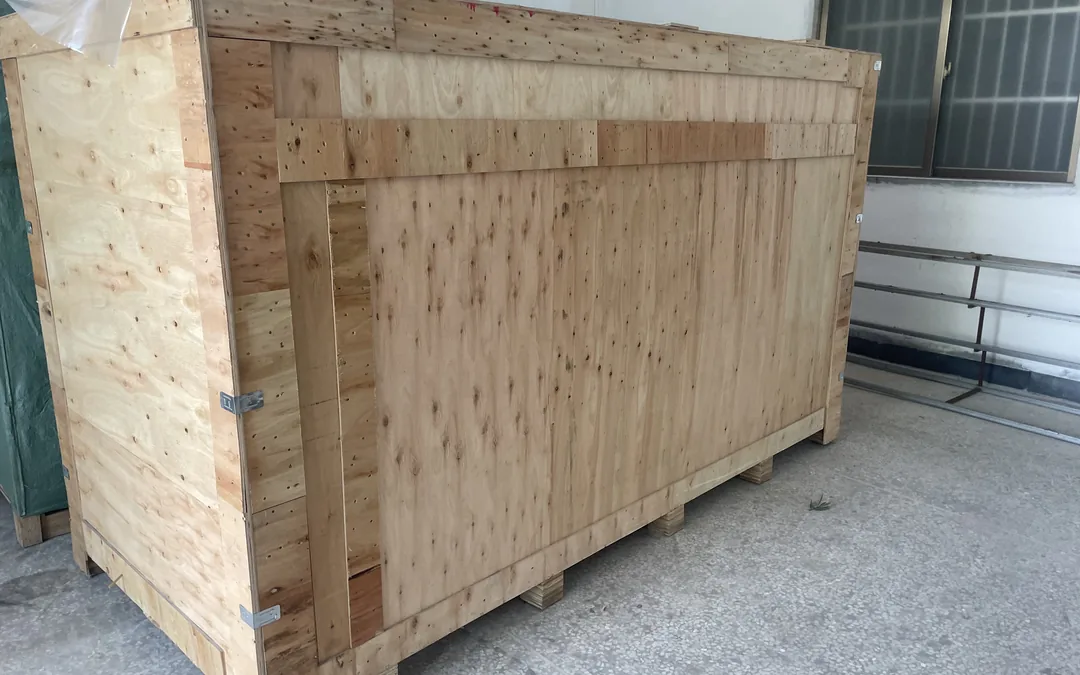
The invoice collapses four units into one line. A mixed container of palms is quoted as "artificial palm trees, 24 pcs". The packing list behind it names fronds, trunk shells, steel cores and base plates as separate crates, because that is how they physically ship. A customs officer reconciles invoice against packing list before anything else happens; when one line has to explain four crate types, the shipment goes to inspection, and the inspection queue is measured in days rather than hours. The declaration that clears is the one where the invoice line count matches the packing list line count, with each line naming what is inside the crate it refers to.
The base plate is invoiced as steelwork. A 900 × 900 × 12 mm plate with four drilled M16 holes is, physically, a steel fabrication, and invoicing it that way is tempting. The decision creates a second tariff line, a second certificate scope and a second product description for the conformity body to review, while the duty rate stays at 5% either way. Nothing is saved and something is added: a reviewer now holds two descriptions for one installation and has to decide which one is the article being imported.
The product registration is keyed to the wrong line. Saudi Arabia applies the GCC tariff at twelve digits, and the twelve-digit code is what decides whether a product sits under a technical regulation or outside every one of them. Register the model against an eight-digit line and the product certificate names a code that the shipment certificate cannot be linked to. The goods are compliant and the file is not, which is the most expensive version of this problem because there is nothing left to fix at the port.
The flame claim on the invoice has no test method behind it. "Fire retardant" in a goods description is not a claim any reviewer can check. A customs file and a Civil Defence file want the same thing: a test report that names the method, the specimen and the material. NFPA 701 Method 1 screens a fabric or film; Method 2 tests a large-scale assembly. Those are different reports, and an invoice that does not say which one it means invites the reviewer to choose.
The shipment is declared as samples to move faster. It moves faster exactly once. A commercial quantity declared at sample value creates a valuation query, and a valuation query holds the container while the authority reassesses against comparable imports. The reassessment is not the expensive part; the storage and demurrage while it runs are.

2. Material Science & Structural Engineering Standards
Tariff classification follows material, and material is decided long before the shipping documents are typed. A tree built from injection-moulded polyethylene foliage, a centrifugally cast fibreglass trunk shell and a galvanised steel core spans three material families, and each family answers "what is this made of" differently.
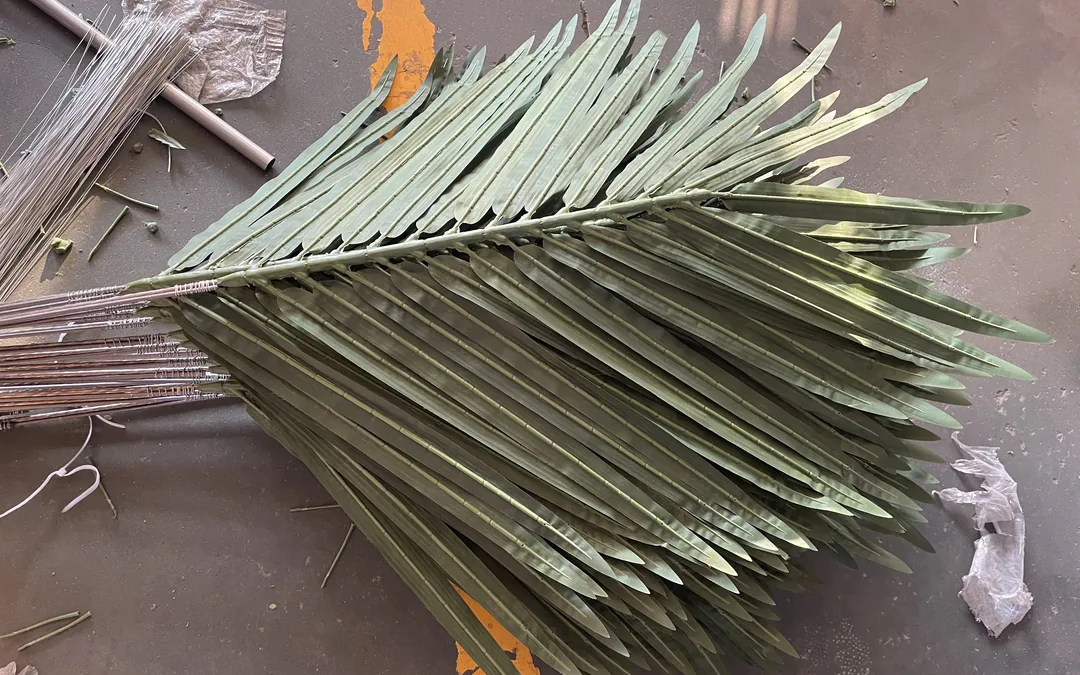
Foliage sets the heading. Heading 6702 covers artificial flowers, foliage and fruit and parts thereof, and splits at six digits into 6702.10 for goods of plastics and 6702.90 for goods of other materials. Injection-moulded PE foliage, at a wall of roughly 0.8–1.2 mm and a leaf density of 1,800–3,200 leaves per cubic metre of canopy, lands in 6702.10. Polyester or silk foliage lands in 6702.90. The distinction matters less for the GCC duty rate, which is 5% on both, than for the product description the conformity body registers: a certificate that names PE does not describe a silk tree, and a mixed order registered under one subheading has to be described consistently on every later shipment.
The trunk shell is the component that can leave the heading. A fibreglass shell moulded from a real trunk is not foliage, and invoiced on its own it reads as a glass-fibre article rather than as a part of an artificial plant. Shipped inside a tree it is a part of that tree, and heading 6702 explicitly covers parts. The workable rule is that components travel on the same line as the article they belong to unless there is a reason to separate them, and the reason has to be better than a clerk's preference.
Mixed consignments are classified by essential character. Where a shipment contains PE foliage, a fibreglass shell and a steel core, the general rules of interpretation point to the component that gives the goods their essential character. For a decorative tree that is the foliage: it is the part the buyer is buying, the part that carries the colour, and the part whose fire performance gets tested. Declaring the consignment by its steel content inverts that logic, and it is a reliable way to have a reviewer ask why a decorative article was declared as a steel structure.
Core specification is also declaration evidence. The core on commercial builds above 3 m runs Ø48–76 mm in Q235 tube with a 2.5–3.2 mm wall, welded to AWS D1.1 shop practice and hot-dip galvanised to 85–120 µm per ISO 1461. Those numbers appear on the shop drawing, and the drawing is what a reviewer compares against the invoice when the description is vague. An invoice that says "steel frame" against a drawing that says "Ø60 × 3.0 mm, 4 × M16 base plate" reads as two different products.
Foliage density changes packed volume, not the code. A denser canopy raises the leaf count per tree and the crated volume per unit, which is a freight and packing-list issue rather than a classification one. It still belongs in the same document set: the packing list should state pieces per crate and net and gross weight per crate, because that is the sheet an officer works from when a container is opened.
3. Life Safety, Fire Codes & Environmental Compliance
Fire documentation and customs documentation are produced by different people in different months, and they meet for the first time at the port. The tariff line is what links them: it decides which conformity route applies, and the route decides which certificate has to exist before the vessel sails.
The test report has to name the method. NFPA 701 Method 1 is the small-scale screening test used for fabrics and films; Method 2 is the large-scale test for assemblies, and it is the one that answers a question about a hanging canopy rather than a flat sample. For European and GCC tenders the parallel route is EN 13501-1, where Class B-s1,d0 describes limited contribution to fire, limited smoke and no flaming droplets. A supplier who says "NFPA 701 certified" without naming the method has handed a reviewer a document reference with no scope.
A certificate belongs to a material, and the material belongs to a line. Changing the foliage polymer, or re-sourcing a leaf from a different compound, invalidates the report in practice even where the paper carries no printed expiry. That is why the material description on the invoice and the material named in the test report have to be the same sentence. Where the invoice says "synthetic foliage" and the report says "injection-moulded polyethylene, 0.9 mm", the file has a gap that only a new test report closes.
SABER splits the obligation in two. The product certificate of conformity covers a model and runs for twelve months; the shipment certificate covers one consignment, runs for ninety days and is issued in one to two working days once the product side exists. Since 1 October 2025 a shipment certificate is required for every commercial import into Saudi Arabia, whether or not the line sits under a technical regulation. Products outside every technical regulation still need product registration and an importer self-declaration before that certificate can issue. None of it can be started by the foreign manufacturer, because both certificates are issued to the importer of record.
The twelve-digit line decides which route applies. Check the full code in the integrated tariff and in the conformity platform's HS list before the product certificate is applied for. A line that reads as non-regulated takes registration, self-declaration and a shipment certificate; a line under a technical regulation takes a product certificate from an accepted body first. Applying for the wrong one costs twelve months of validity, because a product certificate cannot be re-pointed at a different line.
The UAE runs on project approval rather than product registration. Civil Defence reviews the design submission before installation, then inspects the completed installation against the approved drawings before issuing the completion certificate. For a fixed installation such as a lobby palm, that inspection is where the base plate, the fixing method and the clearance from the sprinkler throw envelope are checked together. A tree with a perfect customs file can still fail here, and the failure is about the installation rather than the product.
4. Technical Comparison Table
| Declaration unit | Tariff line basis | Duty and VAT base | Certificate attached | Application |
|---|---|---|---|---|
| Complete palm, PE foliage, one line | 6702.10, goods of plastics | 5% of CIF; VAT 15% KSA / 5% UAE | NFPA 701 report plus product and shipment certificates | 5-star hotel atrium, 6 m specimen under glazing |
| Flat-packed fronds only | 6702.10, parts of artificial foliage | 5% of CIF; same VAT treatment | Foliage test report naming polymer and wall thickness | Seaside resort cabana row, fronds replaced on site |
| Trunk shell shipped separately | 6702.90 as a part, or a glass-fibre article if invoiced alone | 5% of CIF; VAT follows the line | Material declaration plus moulded-surface sample | Mall atrium, 4 m canopy with a heavy trunk read |
| Steel core and base plate invoiced as steelwork | 7326 or 7308 rather than 6702 | 5% of CIF; a second line and a second certificate scope | Weld procedure, galvanising thickness record, shop drawing | Airport VIP lounge, where the frame is set before the shell |
| Loose anchor kit, studs and capsules | 7318, screws, bolts and similar articles | 5% of CIF; usually a low-value line | None, but the line invites a physical inspection | Corporate HQ reception, slab fixing with chemical anchors |
Read the table as a map of where a file breaks rather than as a duty calculation. Four of the five rows carry the same 5% rate, so the tariff itself is not the variable. What changes row to row is how many lines the consignment produces, how many certificates have to name a material, and whether the officer who opens the crate finds what the invoice promised. The last two rows generate the surprises, because they take a decorative article and present part of it as structural steel or as loose hardware.
5. Structural Anchoring & MEP Coordination
The base plate is the component most likely to be declared twice, in two different ways, by two different people. The factory quotes it as part of the tree; the installer's bill of quantities lists it as a steel plate; the forwarder sees a crate that weighs more than the foliage and asks what is inside. Three descriptions of one object is how a clean file becomes a query.
Fix the description at shop drawing stage. A base plate described as "900 × 900 × 12 mm, four M16 holes at 700 mm centres, hot-dip galvanised" matches a drawing, a crate label and an invoice line without translation. Described as "mounting bracket", it matches nothing, and it invites the officer to open the crate and form an independent view. The dimensions are not decoration; they are why the description can be verified without opening anything.
Keep the anchor kit on the same line as the tree where quantities allow. Chemical capsules, threaded studs and nuts are hardware, and invoiced separately they become a hardware line with its own inspection logic. Shipped inside the base plate crate, itemised on the packing list, they keep one description for one installation. Where a project genuinely needs a separate hardware consignment, the packing list has to reference the tree line it serves.
Declare the slab interface, because it is the part an inspector can see. On a fixed installation the base plate is embedded or set in concrete, and the finished floor hides it. The drawing set that travels with the shipment should carry the embed detail, the plate thickness and the anchor specification, because that is what the Civil Defence inspection compares against the approved design at handover. A file with a strong product certificate and no embed detail stalls at exactly the wrong moment.
Coordinate the sprinkler envelope before the crate is built. A 6 m canopy in a glazed atrium changes the sprinkler layout beneath it, and the clearance is settled at design stage rather than at installation. Where the tree sits inside the throw envelope of an existing head, the fix is a revised layout, not a smaller tree. Bringing the canopy dimensions into the fire submission early keeps the tree and the sprinkler design from arguing with each other on site.
Treat the engineering calculations as part of the export file. Wind load, plate size and anchor count for an exterior or roof-level installation are project-specific, and the numbers in a custom anchor submission are the same numbers a reviewer looks for if the installation is inspected after handover. Producing them once, in a document the factory, the installer and the importer all hold, avoids the version conflict that turns a routine inspection into a re-submittal.
6. Commercial Contractor FAQs
Is an artificial palm classified as one code or as several? One code when it is invoiced as a complete article: heading 6702, subheading 6702.10 for PE foliage or 6702.90 for foliage of other materials. It becomes several lines when the steel base plate, the anchor kit or the frame is invoiced as steelwork or hardware. The duty rate stays at 5% of CIF either way; what changes is the number of certificate scopes and the chance of inspection.
Does flat-packing change the duty? No. Heading 6702 covers parts as well as complete articles, so fronds and trunk shells shipped flat still classify inside the heading. Flat-packing changes freight and the packing list, not the tariff. What it does change is the invoice description: each crate type needs its own line, and "flat-packed palm, 24 sets" against four crate types is the mismatch that triggers inspection.
Which certificate does the shipment certificate depend on? On the Saudi route, a product certificate of conformity for the model, valid twelve months, then a shipment certificate per consignment, valid ninety days. Since 1 October 2025 the shipment certificate is required for every commercial import, whether or not the line sits under a technical regulation. Both are issued to the importer of record, so a factory can prepare the test reports and material declarations but cannot obtain either certificate.
What should travel inside the container besides the goods? Commercial invoice, packing list with pieces and gross weight per crate, certificate of origin, the test report naming method and specimen, the material declaration naming polymer and wall thickness, and the drawing set with plate dimensions and embed detail. The documents that matter at the port are the ones that describe the crate the officer is standing in front of, at a level of detail that lets the description be checked without opening it.
Project Engineering Support & CAD Requests
Every shipment we crate carries a component-level packing list, a material declaration naming polymer and wall thickness, and a drawing set with plate dimensions and embed detail, because the file that clears is the file that describes each crate honestly. For a live project, send us the destination port, the importer of record and the installation type; we will return the declaration split by component, the test reports that match the specified materials, and the drawing set the conformity body will ask for. On larger commercial atrium schemes the plate and anchor schedule is issued with the packing list, so the importer's broker is not rebuilding it at the port. The same package supports a hotel atrium submission where the fire report and the fixing detail are reviewed together, and a specification for a fan palm at any height between 3 m and 12 m, where the frond packing method changes the crate count.
👉 Chat with Structural Engineering on WhatsApp (Instant Project Review)