Executive Summary
An indoor artificial tree does not fail by wearing out; it fails by greying. In a mechanically ventilated lobby, dust lands at roughly 0.5–2.0 g/m² per month, and a 4 m canopy presents 18–30 m² of projected leaf surface, so a visible film arrives in 6–14 months without cleaning. The workable cycle is 3–4 weeks at entrances, 4–6 weeks in food service, 8–12 weeks in a hotel atrium and 12–16 weeks in low-traffic offices. Budget 11–65 crew-hours per tree per year, and plan the first foliage re-dress at year 3–5.
1. What Goes Wrong Without This
The purchase case for an indoor tree rests on one promise — the space looks the same in year three as it did on opening day. That promise is kept or broken by a cleaning schedule, and the schedule is almost never written down at handover.
Dust changes the colour before it changes the shape. A matte dark-green PE leaf holds a fine film well. At 2–4 g/m² the film reads as a grey cast rather than as dirt, so nobody raises a work order; the tree simply starts to look cheaper than it is. Measured at three fixed witness points, a lobby tree that has never been cleaned typically drifts 4–8 ΔE units within two years. That is enough to be visible beside a new panel from the same batch, and enough to end any argument about whether the tree has aged.
The wrong agent does more damage than the dust. Four habits shorten life more than dirt does. Solvent sprays attack the print layer on moulded leaves and leave a cloudy haze that cannot be polished out. Bleach and alcohol above 10% strip the matte topcoat and raise gloss permanently. Steam softens the hot-melt adhesive behind blossom clusters at 70–90 °C, and strands start shedding within a season. Wet-wiping silk or polyester blossom bleeds dye into pale petals and corrodes the wire core from inside, which surfaces months later as brown staining at the stem.
Access is decided by nobody, so nothing above 3 m gets cleaned. A 5 m canopy needs a lift, a pole brush or a documented access route. Where the manual names none of them, facilities clean the bottom metre and photograph the tree from an angle that hides the rest. The dust line then sits at exactly the height a mezzanine or a stair landing looks straight into.
Re-dress is treated as a warranty claim instead of a budget line. Foliage that has been cleaned correctly still changes: the matte topcoat wears on the most-touched leaves, blossom edges fade, and the canopy thins where guests brush past. Replacing the lower 20–30% of panels at year three costs a fraction of a new tree and resets the appearance; discovering it at year six usually means replacement. Projects that leave the re-dress line out of the maintenance budget almost always replace the tree instead of re-dressing it.
Nobody owns the baseline. Without a photo record, serial numbers and a colour reading at handover, every later conversation about appearance is opinion against opinion. The cheap version of that problem is a discount; the expensive version is a tree pulled out of a lobby in front of the operator.
2. The Decision Framework
Seven questions can be answered before the purchase order, and their answers become the maintenance section of the O&M manual. Each one has a wrong answer that is common in practice.
1. What is the exposure class? Class by where the tree stands, not by what it cost. Door line: air velocity, road grit and two to three times the dust of an interior position. Food service: aerosolised oil that bonds to the surface and needs a surfactant rather than a dry cloth. Atrium under glass: UV plus dust, so colour and soiling drift together. Interior circulation: the baseline case.
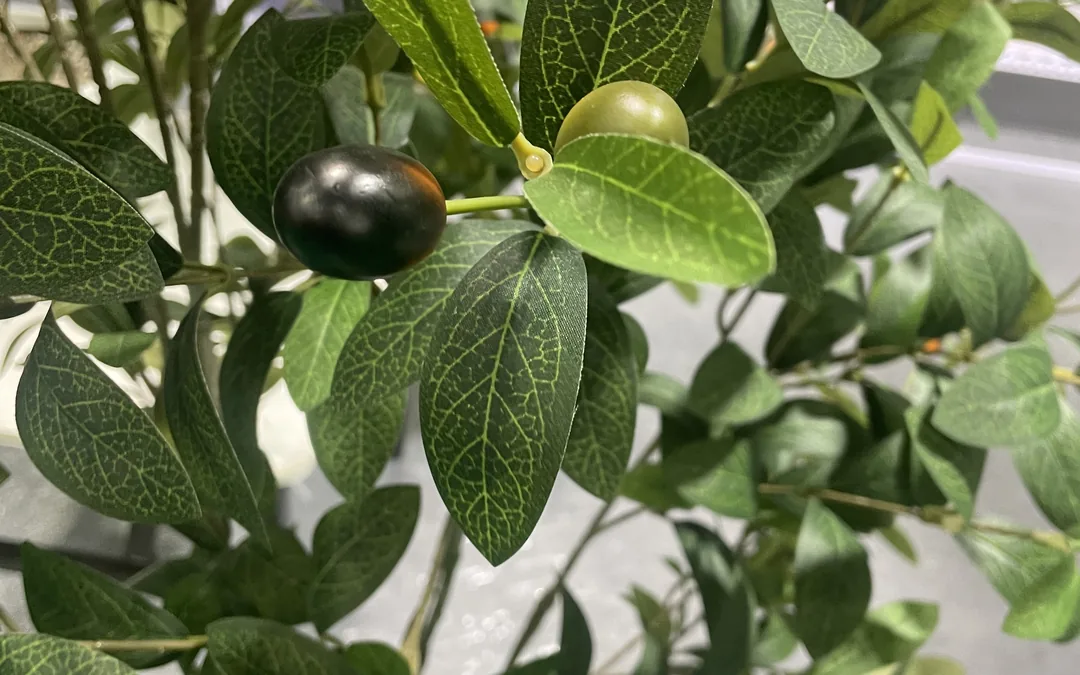
2. Which materials are in the tree? The method follows the material, and one tree usually mixes three. Moulded PE takes damp wiping and low-pressure air. Polyester silk takes dry methods only. Glass-fibre trunk shells and powder-coated steel take a damp cloth with a pH-neutral agent. A method that is safe for the trunk can destroy the blossom, so the manual lists them separately rather than as "the tree".
3. What is the acceptance criterion? "Clean" is not a criterion. Use three: ΔE ≤ 3 against the handover reading at three witness points, no visible film on upper leaf faces at 45° from 2 m, and no gloss increase above 5 GU. All three are checkable by a supervisor with a phone camera and a colour card, without a laboratory.
4. How often, and on what trigger? Set the interval from dust load and traffic, then shorten it one step for the first three months after any building works in the zone. Construction dust is heavier and more abrasive than operational dust, and it arrives as an event rather than as a gradual film.
5. What is the access plan? Name the equipment (pole brush to 4 m, scissor lift above 4 m, low-pressure air line), the point a technician may lean on, and the floor protection. An access plan that assumes a ladder against a 5 m canopy is not a plan; it is a damage report waiting to be written.
6. What spare stock is held? Hold 5–10% spare foliage panels and two or three spare blossom strands per tree, keyed to the panel IDs on the packing list. Without spares, one torn panel in year two forces either a visible gap or a full re-dress.
7. Who signs the annual review? One named role, one date per year, comparing witness-point readings and photos against the handover baseline. That single line separates maintenance from a contract that quietly does nothing.
3. Numbers, Tiers and Timelines
| Exposure tier | Dust load (g/m² per month) | Cleaning interval | Crew-hours per tree per visit | Annual crew-hours | First re-dress | Share of tree value per re-dress |
|---|---|---|---|---|---|---|
| Entrance or door line | 1.5–3.0 | 3–4 weeks | 3.0–5.0 | 39–65 | Year 2–3 | 25–35% |
| Food service or lounge | 1.2–2.5 | 4–6 weeks | 2.5–4.0 | 22–52 | Year 3 | 25–35% |
| Lobby or hotel atrium | 0.5–2.0 | 8–12 weeks | 2.5–4.5 | 11–29 | Year 3–5 | 30–45% |
| Office or low-traffic interior | 0.3–1.0 | 12–16 weeks | 2.0–3.5 | 7–15 | Year 5–7 | 30–45% |
| Atrium under glazing | 0.8–2.0 plus UV | 6–8 weeks | 3.0–5.0 | 20–43 | Year 3–4 | 30–45% |
Read the annual hours column as a budget rather than a quotation. It assumes a tree of 3.5–5.5 m with 18–30 m² of projected canopy, and it includes setup and access. Below 3 m the visit drops to 1.5–2.5 hours; above 6 m it rises to 6–9 hours, mostly because of the lift. The re-dress share is the cost of replacing worn panels against the original tree value — the reason a re-dress at year three is cheaper than a replacement argument at year six.
One further number belongs in the tender: the drift rate. Panels cleaned on the schedule above and kept out of direct glazing exposure hold ΔE ≤ 3 for about five years. Panels that are never cleaned reach the same drift in roughly 24 months, which makes the maintenance budget a service-life decision rather than a housekeeping one.
4. How to Apply It to a Live Project
The maintenance clause is easiest to insert at enquiry and most expensive to add after handover. Six points in the project flow carry it.
At enquiry. Ask for the material schedule by component — foliage polymer or fabric, trunk shell, coating, blossom adhesive — and for the cleaning agent each one tolerates. A supplier who cannot answer in writing is selling a display prop, not a commercial asset. This is also where a custom build gets scoped: a non-standard custom anchor or an unusual canopy shape usually implies an unusual cleaning route.
At sample approval. Mark three witness points on the sample or on the first production unit and record a colour reading at each, under the lighting the finished space will use. Two minutes at approval saves a year of argument.
At shop drawing. Put cleaning access on the drawing: lift position, clear floor area required, and the load path if a technician leans on the frame. On a large commercial atrium tree the access route often conflicts with the lighting truss, and resolving that on paper costs nothing.
At production. Confirm the spare-panel quantity and key every panel to an ID on the packing list. Spares that arrive without IDs get used on the wrong tree or lost in a store room.
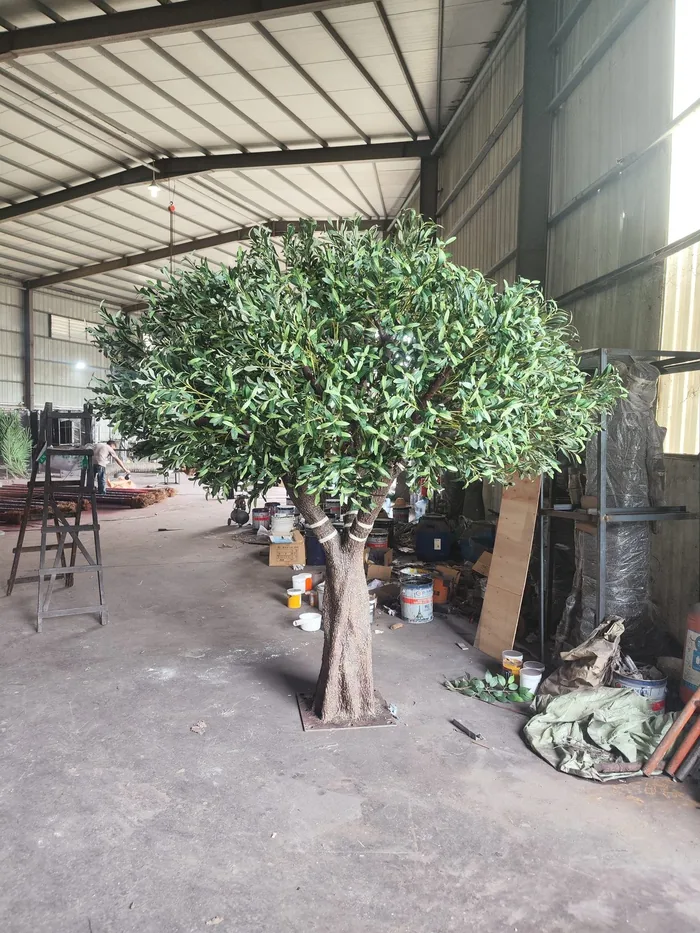
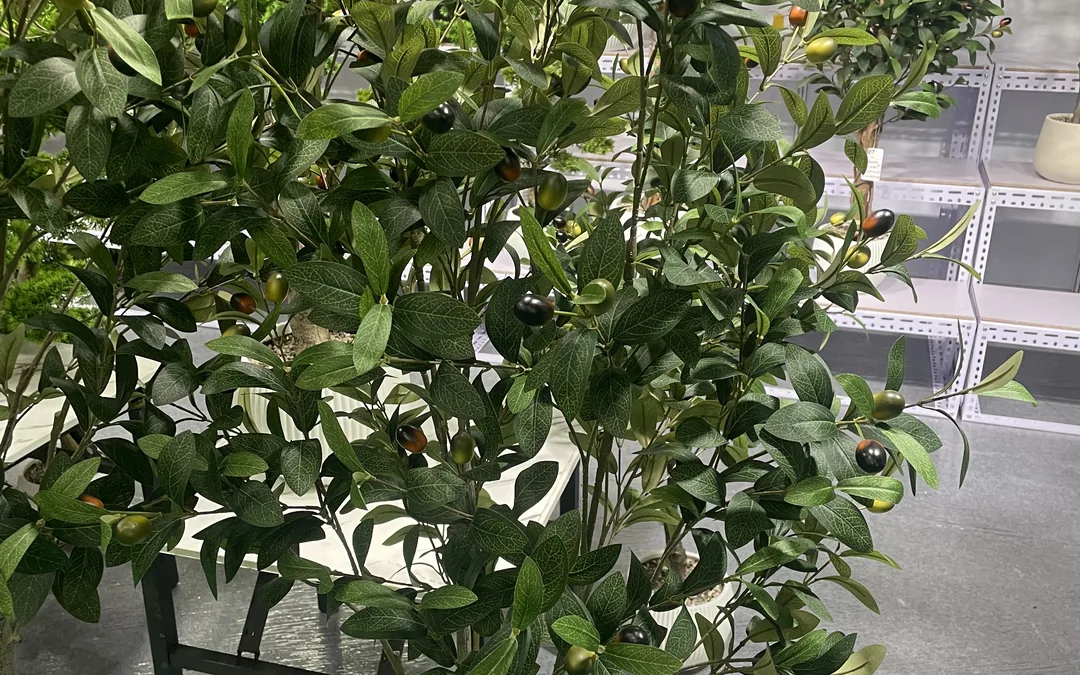
At installation. Build a handover pack: twelve photographs from fixed positions, witness-point readings, serial numbers, spare stock location, and the signed cleaning method per material. Give it to the facilities team, not to the design file. A large specimen such as the olive tree needs the access plan in the same pack, because its canopy is cleaned from a lift rather than from the floor.
At twelve months. Review the readings against baseline and move the interval one step up or down. This is also the moment to inspect blossom adhesive at the hottest point in the canopy and to confirm that no strand has lost its tie. Two logged visits a year to the same trees are what keep a five-year appearance target realistic.
5. Commercial Contractor FAQs
How often should an indoor tree actually be cleaned? Set it by tier rather than by calendar habit: 3–4 weeks at a door line, 4–6 weeks in food service, 8–12 weeks in a lobby, 12–16 weeks in a low-traffic office. After any fit-out work in the same zone, clean once immediately and once again four weeks later, because that dust is abrasive as well as heavy.
Can silk blossom be washed? No. Water bleeds dye into pale petals and starts corrosion on the wire core, and the staining shows up weeks later at the stem. Silk and polyester blossom get dry methods only: soft brush, low-pressure air under 2 bar, dry microfiber lift. PE foliage is the component that can take a damp wipe.
What cleaning agents are safe on moulded PE leaves? A pH-neutral surfactant at 0.5% in water, applied with a damp microfiber and buffed dry. No solvent sprays, no bleach, no alcohol above 10%, no steam. Each of the four either clouds the print layer, raises gloss permanently, or softens the hot-melt adhesive that holds blossom clusters.
How can a facilities team verify the tree is being cleaned properly? Three checks: ΔE ≤ 3 at the handover witness points, no film visible on upper leaf faces at 45° from 2 m, and no gloss rise above 5 GU. Photograph the same three points each visit. If the readings drift while the invoices keep coming, the schedule is being signed rather than performed.
Project Engineering Support & CAD Requests
Every tree we ship carries a component-level cleaning sheet, witness-point readings and a spare-panel list, because the maintenance section is where an indoor installation either holds its appearance or quietly loses it. For a live project, send us the space type, the canopy size and the access constraint; we will return the cleaning interval, the agent list per material, and the re-dress budget at year three and year five. Custom builds and unusual canopies get the access route drawn on the same sheet as the fixing detail, so facilities are not improvising a lift position after opening. Our team can also review an existing O&M document and mark the clauses that will not survive contact with a real cleaning crew.
👉 Chat with Structural Engineering on WhatsApp (Instant Project Review)